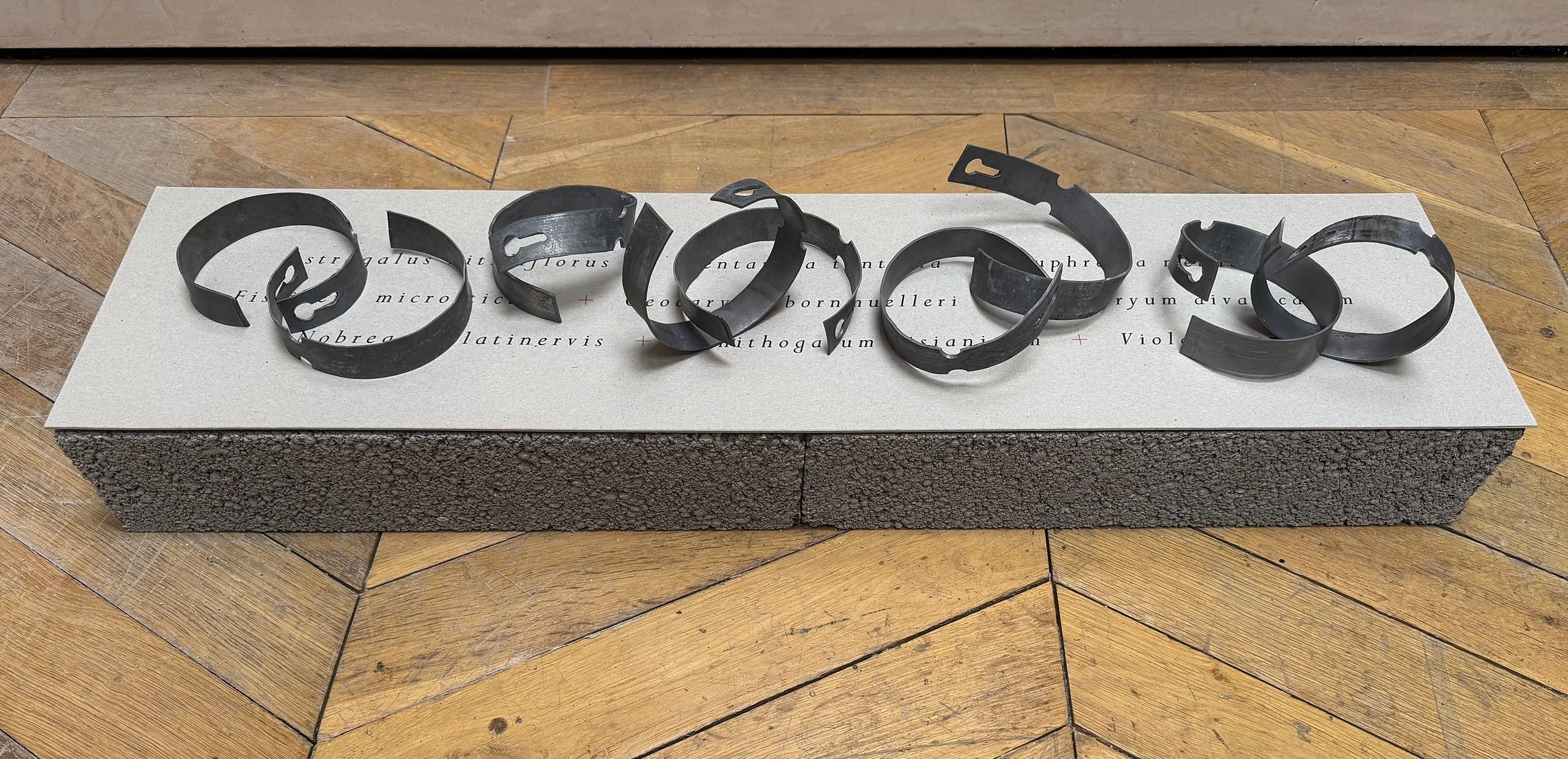
Extinct in the Wild (In Loving Memory), 2025.
Materials + Concept
'Extinct in the Wild (In Loving Memory), 2025.' is a sister work to 'Extinct in the Wild (R.I.P.), 2025.' the materials and rational are much the same; in a single memorial piece it references all nine extinct plants, making for a larger sculpture, 88x22x22 cm.
As in Extinct in the Wild (R.I.P.), 2025, a digitally produced typographic layout is printed on greyboard, which again offers a cushioning quality against the harsh concrete surface; nevertheless these two works are to be regarded separately as they each have their own personality; 'Extinct in the Wild (In Loving Memory), 2025' sits in quiet reverence, the Latin names barely tolerating an array of lead curls which act as funerary items, (a swarf bi-product from cutting lead with tin-snips), they scatter across the names of the departed extinct species of plants, obscuring their names from sight and memory; these funerary items in another context might have inspired the impression of a protective veil or 'shroud'.
The gravestone quality deliberately infers a memorial equivalent to that expected for humans by humans.
Extinct in the Wild (R.I.P.), 2025. Selected_London Group Open, 2025.
Materials + Concept
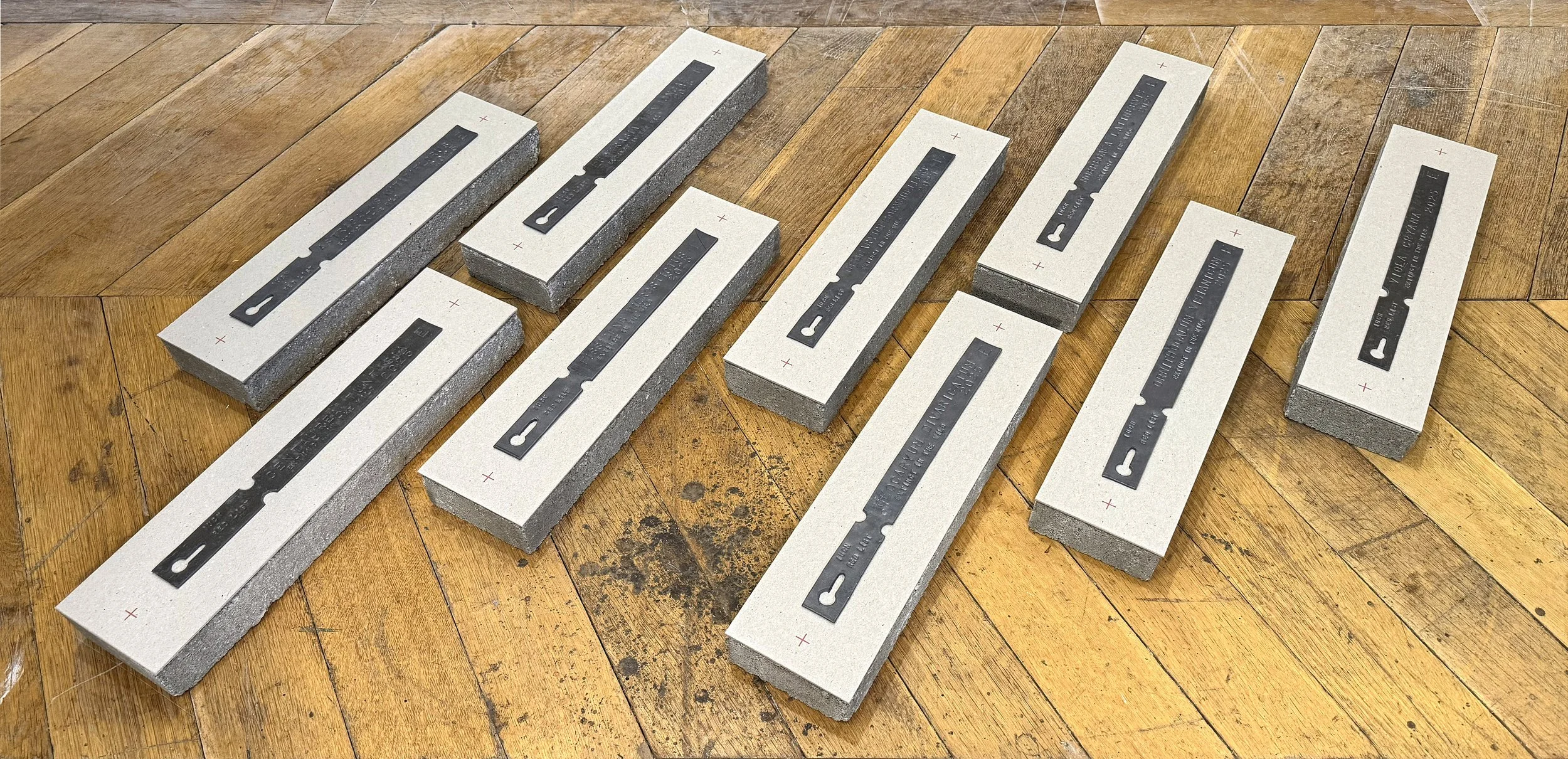
Materials used in this work play an important role; lead, archival greyboard, digital print, and concrete; the mining, harvesting, and energy usage required to produce these materials and technology, should remind us of the damage done, the poisoning and physical disruption to the planet, animal life forms, and plantae; whilst each lead plant label is embossed with a plants name it additionally contains an index of other relevant information; source of reference, date of assessment and level of vulnerability.
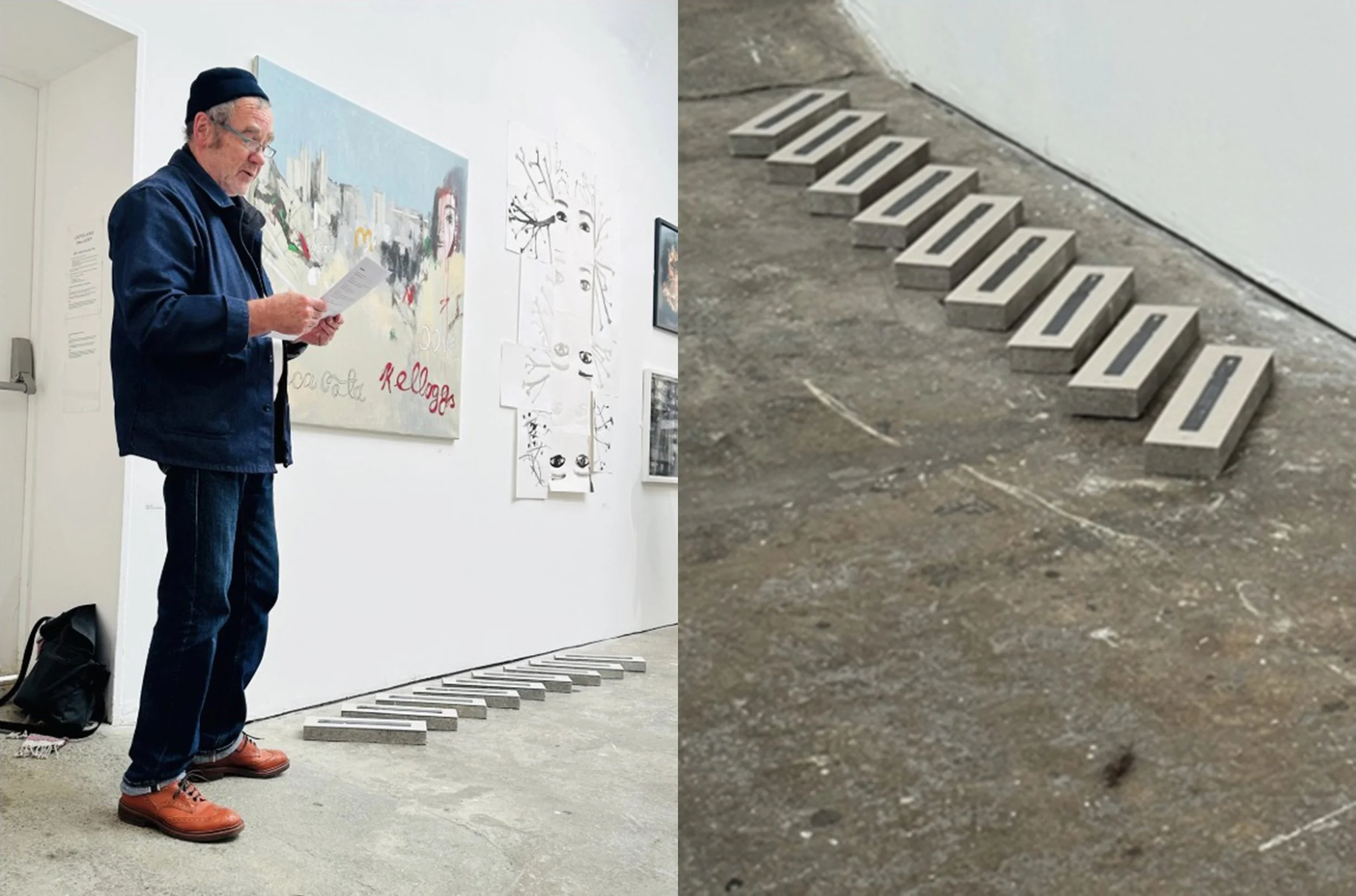
This is a floor mounted sculpture of concrete blocks, all are identical in size and material structure; nine gravestone blocks support nine lead 'blade like' plant labels, marked with their own Latin plant names, and placed onto a digitally printed greyboard topper; this intentionally separates the named labels from the harsh concrete surface, and softens their resting place; silently they all ask questions, each with its own story. The concrete blocks are quite small, they measure 39 x 10 x 5 cm.
Concrete gravestones speak of death and mourning; the materiality and physical weight of lead strongly relates the subject to the occasion; the message juxtaposes vulnerability, loss, and grief in the natural world, the assessment of extinct plant species, and the threats to both the habitat and ecology of these biodiverse systems, the project pays an emotional tribute to the eco-problem.
Images_Extinct in the Wild (R.I.P.), 2025. London Group Open, 2025.
Extinct in the Wild (The Idea of Absence), 2025.
Materials + Concept
Each of the first three ‘Extinct in the Wild’ works has documented nine extinct plants, in ‘date last seen’ order:
Geocaryum divaricatum (dls: 1852, EX),
Geocaryum bornmuelleri (dls: 1891, EX),
Astragalus nitidiflorus (dls: 1909, EX),
Ornithogalum visianicum (dls: 1911, EX),
Centaurea tuntasia (dls: 1912, EX),
Viola cryana (dls: 1927, EX),
Euphrasia mendoncae (dls: 1936, EX),
Nobregaea latinervis (dls: 1946, EX),
Fissidens microstictus (dls: 1982, EX).
The two sculptures, 'Extinct in the Wild (R.I.P.), 2025', and 'Extinct in the Wild (In Loving Memory), 2025', express both loss, and grief; and if we believe what we have been told, the epitaph 'Sit tibi terra levis', ('May the earth weigh lightly upon you'), might have inspired the impression of a protective veil or 'shroud', which in this case would have paved the way for an emotional tribute to extinct plants and wild life.
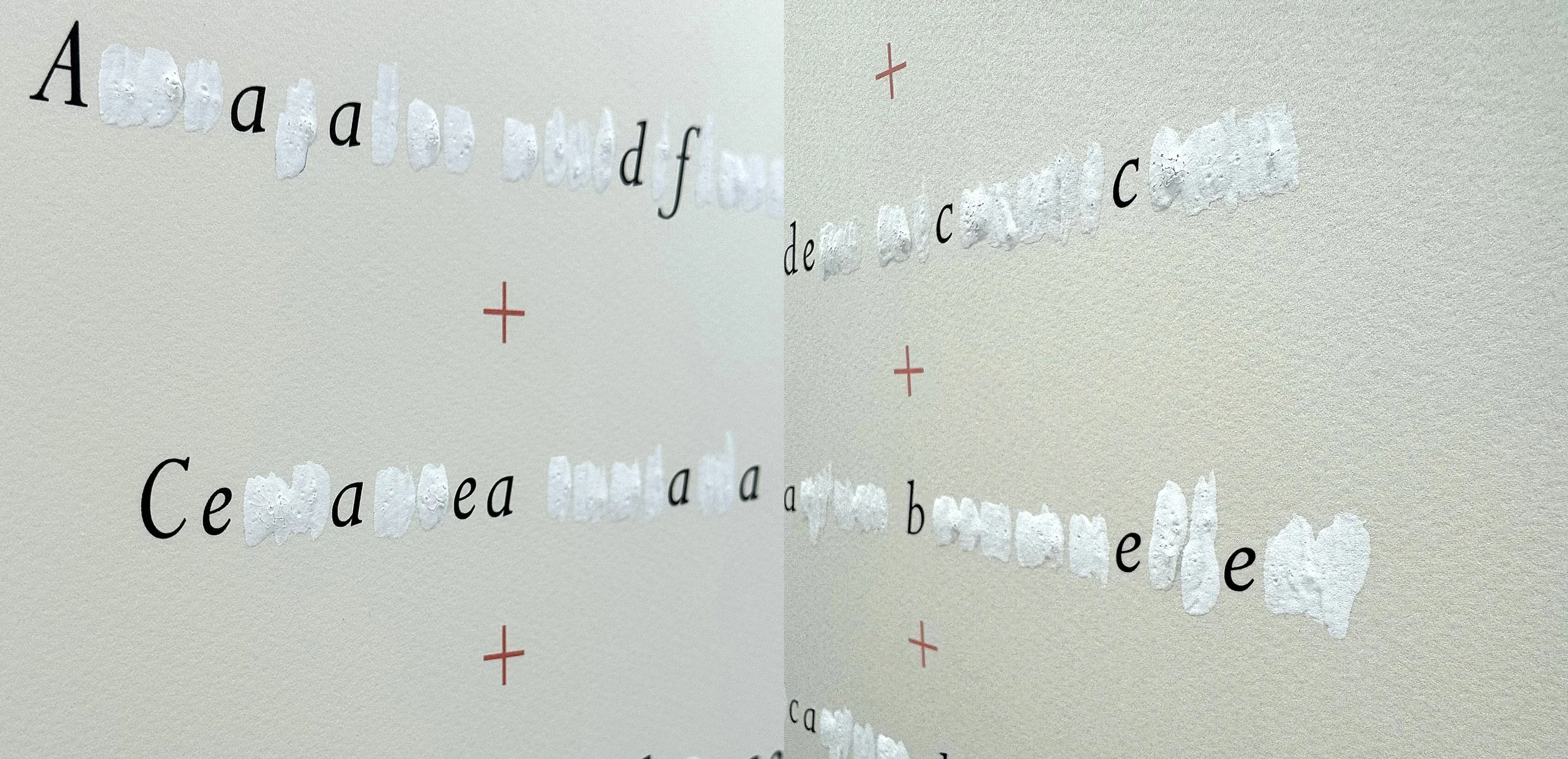
But, 'Extinct in the Wild (The Idea of Absence), 2025', inhabits the conceptual territory of a broken system, and a real world of asset stripping; digitally printed text provides a list of coded symbols, (hexadecimal characters derived from the nine redacted Latin names of extinct plants), as a pictorial trope the work expresses the outcome when natural language is re-invented to its computer coded other; in principal the typographic 'shroud' provides a protective veil; but in reality nothing could be further from the truth; not everyone can read or understand the code; the 'shroud' is one of a masked silence, where those responsible have at great lengths concealed the evidence of environmental destruction, corporate profit and political gain from the public eye.
"So it goes", Kurt Vonnegut